


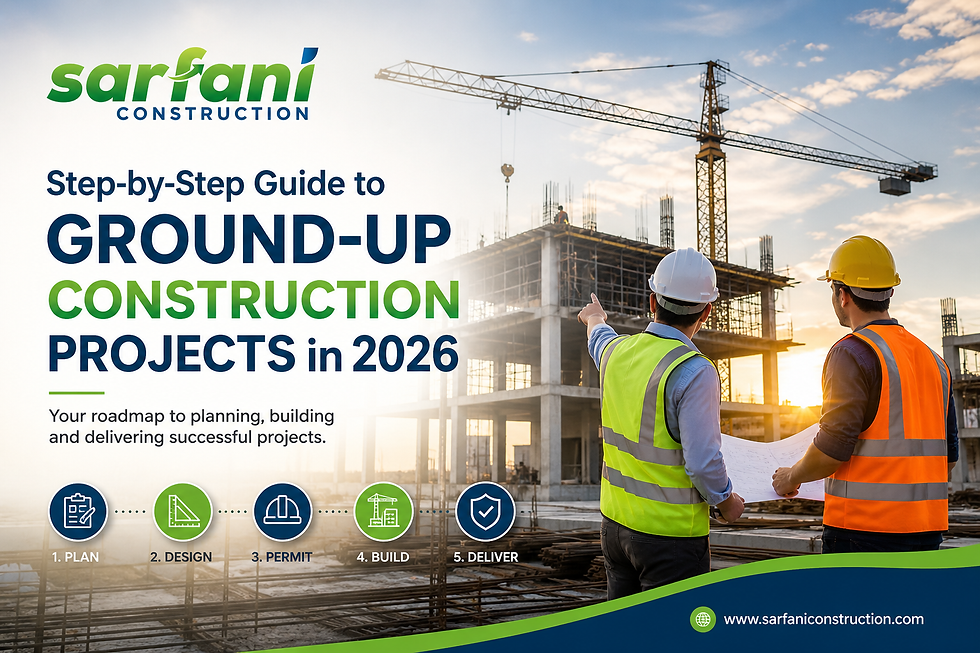
Step-by-Step Guide to Ground-Up Construction Projects in 2026
- shay281
- May 1
- 4 min read
Ground-up construction remains one of the most ambitious and rewarding undertakings in the building industry. Unlike renovations or remodels, ground-up projects start from scratch—transforming an empty lot into a fully functional commercial or residential property. At Sarfani Construction, a trusted construction company in San Antonio, we specialize in guiding clients through every stage of this process with precision, transparency, and expertise. If you’ve ever searched for a construction company near me to handle complex projects, this guide will walk you through the essential steps of ground-up construction in 2026.
1. Initial Planning and Feasibility
Every successful project begins with a clear vision. During the planning stage, our team collaborates with clients to define goals, budgets, and timelines. We conduct feasibility studies to evaluate site conditions, zoning regulations, and environmental factors. This ensures that the project is not only achievable but also aligned with long-term objectives. In 2026, advanced digital tools and AI-driven analytics make this stage more accurate than ever, reducing risks before construction begins.
2. Design and Permitting
Once feasibility is confirmed, architects and engineers step in to design the structure. At Sarfani Construction, we integrate modern design principles with practical functionality, ensuring that every blueprint meets both aesthetic and regulatory standards. Obtaining permits is a critical step, especially for commercial construction services. Our project management team streamlines communication with local authorities in San Antonio, ensuring compliance with building codes and minimizing delays.
3. Budgeting and Scheduling

Effective construction project management hinges on accurate budgeting and scheduling. In 2026, we leverage cloud-based project management platforms to provide real-time updates and transparent cost tracking. This allows clients to monitor expenses and progress seamlessly. By anticipating potential challenges, we create flexible schedules that keep projects on track without compromising quality.
4. Site Preparation
Ground-up construction requires meticulous site preparation. This includes clearing the land, grading, and installing essential utilities such as water, electricity, and sewage systems. At Sarfani Construction, we prioritize sustainability by incorporating eco-friendly practices like soil stabilization and erosion control. Proper site preparation lays the foundation for a safe and efficient build.
5. Foundation Work
The foundation is the backbone of any structure. Depending on the project type, we may use slab, crawl space, or basement foundations. Precision is key—errors at this stage can compromise the entire building. Our experienced crews use advanced equipment to ensure durability and compliance with structural standards.
6. Structural Framing
Framing brings the design to life. Steel, wood, or concrete frameworks are erected to form the skeleton of the building. This stage requires coordination between multiple teams, including carpenters, welders, and engineers. With Sarfani Construction’s expertise in ground-up construction, we ensure that framing is executed with accuracy, setting the stage for interior and exterior work.
7. Exterior and Interior Work

Once the structure is framed, exterior walls, roofing, and insulation are installed. Interior work follows, including plumbing, electrical systems, HVAC, and drywall. Our commercial construction services emphasize efficiency and safety, ensuring that every system is integrated seamlessly. By 2026, smart building technologies—such as automated climate control and energy-efficient lighting—are becoming standard features in new builds.
8. Finishing Touches
The final stage involves flooring, painting, fixtures, and landscaping. These finishing touches transform a construction site into a polished property ready for occupancy. Sarfani Construction’s attention to detail ensures that every project reflects the client’s vision while meeting industry standards.
9. Final Inspection and Handover
Before handing over the keys, we conduct thorough inspections to verify safety, functionality, and compliance. Clients receive detailed documentation, warranties, and maintenance guidelines. This step underscores our commitment to transparency and long-term client satisfaction.
Why Choose Sarfani Construction?
Choosing the right partner for ground-up construction is crucial. As a leading construction company in San Antonio, Sarfani Construction combines technical expertise with personalized service. Whether you’re searching for a construction company near me or exploring large-scale commercial projects, our team delivers excellence at every stage. With cutting-edge technology, sustainable practices, and a client-first approach, we redefine what it means to build from the ground up.
Conclusion :
Ground-up construction in 2026 is more advanced, efficient, and sustainable than ever before. From planning to handover, each step requires careful coordination and expertise. At Sarfani Construction, we take pride in guiding clients through this journey, ensuring that every project is a testament to quality and innovation. If you’re ready to bring your vision to life, trust the experts who understand the complexities of modern construction.
FAQ's :
How long does a ground-up construction project take?
The timeline depends on the size and complexity of the project. A small residential building may take 6–12 months, while large commercial projects can take 1–3 years or more. Factors like approvals, weather, labor availability, and material supply can affect the timeline.
Do I need permits for ground-up construction?
Yes, permits are mandatory. You’ll typically need approvals for zoning, building design, environmental compliance, and safety standards. Skipping permits can lead to legal issues, fines, or even project shutdown.
Should I hire a general contractor or manage the project myself?
Hiring a general contractor is usually the best option, especially for complex projects. They handle coordination, labor, materials, and timelines. Managing the project yourself may save money but requires experience and time.
What role does technology play in modern construction projects?
Technology plays a huge role in improving efficiency and accuracy. Tools like Building Information Modeling (BIM), drones, AI-based planning, and project management software help reduce errors, save time, and control costs.


Comments